Beyond Classical Chess: ChessPuzzle.net Launches Chess 960 Puzzles
What is Chess960?
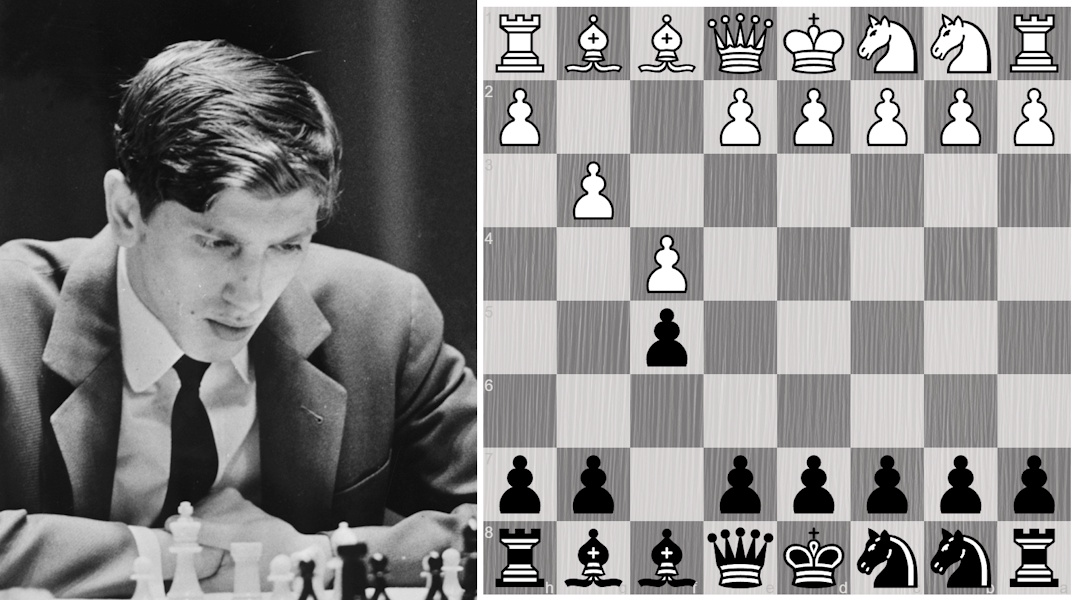
Chess960, also known as Fischer Random Chess, is a variant of chess created by former World Champion Bobby Fischer to reduce the influence of memorized opening theory. In Chess960, the back-rank pieces are shuffled randomly before each game (with some restrictions), creating 960 possible starting positions. This forces players to think creatively from the very first move, relying on their understanding of chess principles rather than memorized sequences.
Setup
The setup of Chess960 follows specific rules to ensure a fair and playable position. The pieces on the back rank are placed randomly, but with three important restrictions:
- The bishops must be placed on opposite-colored squares (one on a dark square, one on a light square),
- the king must be placed between the rooks (to enable castling),
- and the position must be mirrored for both players.
The pawns remain in their traditional positions on the second and seventh ranks. These constraints reduce the total possible starting positions to exactly 960, hence the name.
Castling rules
One of the most distinctive features of Chess960 is its castling rules. Regardless of where the king and rooks start, the final position is the same as after castling in standard chess: for kingside castling, the king ends up on g1 (g8 for Black) and the rook on f1 (f8), while for queenside castling, the king lands on c1 (c8) and the rook on d1 (d8). All other castling rules remain the same:
- Neither piece can have moved previously,
- the king cannot castle out of, through, or into check,
- all squares between the king's starting and ending positions (including the final square) must be empty (except the castling rook),
- and all squares between the rook's starting and ending positions (including the final square) must be empty (except the castling king).
Chess960 support on ChessPuzzle.net
When solving a Chess960 puzzle where castling is still possible, you'll see a helpful message:
"This is a Chess960 position. Click your king to see which rooks can castle. Drop the king on the rook to castle."
This makes it easy to understand your castling options at a glance. In standard chess puzzles, you can also click your king to visualize potential castling moves.
The solution page supports full Chess960 games, allowing you to review complete games from this fascinating variant. The integrated chess engine available on the solution page can handle Chess960 positions, providing accurate analysis for all your moves.
Chess960 example puzzles
Sometimes the unconventional starting positions in Chess960 can lead to opening catastrophes, as in the following example:
Here is an example where you have to understand the Chess960 castling rules:
Later in the game, the positions often look like normal chess positions, as in this example:
You can play more Chess960 puzzles in the following lists:
Chess960 tournaments
Chess960 has gained significant tournament recognition in recent years. The Mainz Chess Classic was an early pioneer, featuring Chess960 events from 2001-2009. FIDE officially recognized Chess960 by holding its first World Fischer Random Chess Championship in 2019. The Chess 9LX tournament held by the Saint Louis Chess Club has attracted top players. In 2024, the Weissenhaus Freestyle Chess G.O.A.T. Challenge brought classical-time-control Chess960 to a top-level invitational format. In 2025, the Freestyle Chess Grand Slam Tour featured major events in Weissenhaus, Paris, Karlsruhe, Las Vegas, and Cape Town.

Thursday, January 23, 2025
Last updated: Thursday, June 11, 2026
Martin Bennedik
Founder of ChessPuzzle.net, International Correspondence Chess Master
Related posts
Puzzle Academy Update: Rank Details, Smarter Workouts, New Guides, and More
This update makes Puzzle Academy clearer and more focused, with a new Rank Details page, next-rank focused workouts, improved guides, more languages, stronger analysis tools, and new training content.Introducing Academy Ranks: A Clearer, Smarter Way to Progress Through Puzzle Academy
Puzzle Academy now has structured ranks from Beginner to Expert, making it easier to start at the right level and track your progress. Discover what's new and how the ranks help guide your training.Introducing Clubs on ChessPuzzle.net
We’re excited to launch the public beta of Clubs — a new way for coaches, schools, and chess clubs to train and grow together on ChessPuzzle.net.